

01
ABOUT THE FILM
The epic documentary film Island in the North offers viewers an epic look at the magically rugged landscape of Iceland, a country that was once considered the edge of the world.
🎬 Island in the North is a large-scale documentary film that presents a unique perspective on the magically harsh and unpredictable landscape of Iceland — a land that for centuries was regarded as the very edge of the known world.
The original film was created in 2013 and had its premiere on Prima ZOOM. Twelve years have passed, and after many returns to Iceland, the film has expanded with additional minutes of unique footage. Moreover, modern advanced technologies have made it possible to convert the original Full HD format into 4K resolution, restoring many fine details.
During filming, the creator travelled almost 15,000 kilometres across the island. He filmed in different seasons — early spring, late summer, and winter — often facing extreme conditions. On the Eyjafjallajökull glacier, temperatures dropped to -32°C, and the journey to the volcano’s crater took four hours in a specially modified super jeep. The filming equipment, weighing around 15 kilograms, often had to be carried up peaks several hundred metres high.
Many scenes required long hours of waiting for perfect lighting conditions, and when the weather ultimately did not allow filming, the filmmaker had to return to the same locations repeatedly. Neither severe frost, strong winds, nor challenging terrain stopped the production. Dozens of hours of footage were captured.
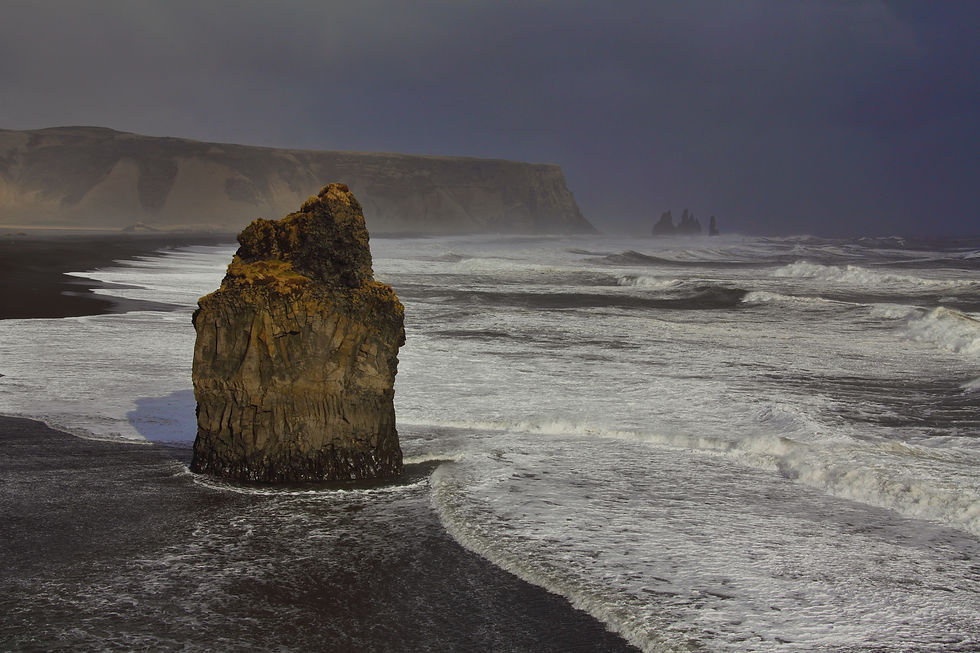
The film takes you to breathtaking natural locations that are often hidden from the human eye, or visible only for a few days a year. Island in the North is a tribute to patience, courage, and deep respect for the wild northern nature.

02
INTERESTING FACTS
“Það býr meira í náttúrunni en við sjáum með berum augum.” or in English:
“There is more living in nature than we can see with the naked eye,” says an Icelandic proverb.
Icelanders are famously open to legends and stories about trolls and elves.
📚 Nature as a Sanctuary
-
What do Icelanders believe in?
-
Around 50–60% of Icelanders admit the possibility that huldufólk (“hidden people”) may exist. This does not necessarily mean literal belief, but rather an openness to the idea that there are things beyond human explanation.
-
Who are the huldufólk?
-
Huldufólk are supernatural beings similar to humans, believed to live inside rocks, hills, lava fields, and other natural formations. They are usually considered invisible to ordinary people unless they choose to reveal themselves.
-
Stories of Encounters
-
There are many accounts from Icelanders who claim to have encountered huldufólk. Some describe mysterious lights in the mountains, strange singing in remote valleys, or vivid dreams after sleeping near rocks believed to be elf dwellings.
-
Official Attitudes and Institutions
-
In some cases, so-called “elf advisors” were consulted during construction projects. One of the most famous was Erla Stefánsdóttir, a well-known seer who advised authorities about locations believed to be inhabited by elves.
-
While Iceland does not have an official “elf affairs office,” places such as Álfagarðurinn (The Elf Garden) in Hafnarfjörður serve as cultural and educational centers focused on Icelandic folklore and hidden people.
-
Construction Projects Delayed Because of Elves
-
In the 1970s, a road in the Álftanes area was rerouted due to opposition from locals who believed it would disturb elf habitats.
-
In 2013, a road project near the Gálgahraun lava field outside Reykjavík was delayed after protests from environmental activists and people claiming the construction would damage the home of the huldufólk.
-
📚 Other Icelandic Curiosities
-
Icelandic folklore remains very much alive. Schoolchildren still learn about trolls, elves, ghosts, and ancient legends as part of cultural education.
-
Some Icelandic families build small “elf houses” in their gardens as symbolic homes for huldufólk, hoping to maintain harmony and good fortune.
-
Building through so-called “elf stones” is taken surprisingly seriously. Before construction, certain rock formations considered sacred or culturally important are often examined carefully.
03
OUR MISSION
Island in the North is a visual journey into the depths of nature and ourselves — a reminder that true beauty reveals itself only to those who slow down.
Island in the North is not merely a cinematic tribute to the Icelandic landscape. It is an invitation to pause, to observe quietly, and to slow down internally in a world driven by speed and superficiality. The film shows that the beauty of nature is not something guaranteed — it is rare, fragile, and often hidden from those who rush through life.
The mission of the film is to immerse the viewer in a profound sense of presence and connection with a natural world that transcends human scale and time itself. It offers an opportunity to rediscover wonder — in light, in silence, and in the slow rhythm of a landscape shaped for centuries without regard to humanity.
Although Iceland lies on the edge of Europe, in this film it becomes an inner landscape — a metaphor for our own longing for authenticity, balance, and peace.
By combining raw documentary filmmaking with visual poetry, the film seeks to awaken sensitivity — not only toward nature itself, but also toward its fragility, impermanence, and the need to protect it.