
HE SPOKE ICELANDIC BY DAY, CZECH IN HIS SLEEP

Aktualizováno: 22. 6.
Journalist and writer Anna Kristín Magnúsdóttir spent her life connecting Iceland and the Czech Republic. Her father arrived in Reykjavík as a 19-year-old immigrant in 1947—and never left.
When Miroslav Randolph Mikulčák stepped off a ship in Reykjavík in January 1947, he had no idea that Iceland would become his home for the rest of his life. He learned the language, adopted the name Magnús Rafn Magnússon, raised a family, and built a successful career. Yet according to his daughter, journalist and writer Anna Kristín Magnúsdóttir, one part of him never entirely left the country where he was born.

By day, he spoke Icelandic.
At night, Czech returned.
Sometimes, while asleep, he would shout words that nobody in the family understood. Anna once told me this story with a gentle smile, as if it were nothing more than a charming family quirk. At the time, I did not realize that this single detail contained an entire story: that of a young Czech immigrant who found a new home in Iceland, and of a daughter who spent her life naturally connecting two distant worlds.
A Young Man from Zlín
Miroslav Randolph Mikulčák was born on September 10, 1927, in the industrial Czech town of Zlín, famous as the home of the Bata shoe company. He studied at the Bata Academy of Foreign Trade and began working in his family's shoe business while still young.
In late 1946, at the age of nineteen, he traveled to London on a business trip. Europe was rebuilding after the war, but political changes in Czechoslovakia were already becoming impossible to ignore. Private enterprise was under increasing pressure, and the freedoms he had grown up with seemed to be disappearing.
Leaving was not a decision made lightly. Travel permits were difficult to obtain, and his older brother Vladimír helped secure the necessary documents. Instead of returning home from London, Miroslav continued north.
On January 2, 1947, he arrived in Reykjavík.
What was meant to be a temporary stop became a lifetime.
Later, he would say that from the moment he arrived, Iceland felt strangely familiar, as if he had somehow been there before. He adapted quickly and never complained about the weather, the food, or the customs that many newcomers found difficult.

Finding a New Home
Iceland was not a random destination.
His family's shoe company already had business ties with Icelandic importer Óli J. Ólason, who became one of his first sources of support after his arrival. Miroslav worked for the company, learned the language, and slowly built a life in a country that seemed to welcome him.
Months became years.
He made friends, established himself professionally, and eventually became managing director of an Icelandic-Swedish cold-storage company before later starting his own business. Among other activities, he represented Czech agricultural machinery manufacturers in Iceland.
Along the way, he met a young Icelandic woman named Elín Kristjánsdóttir.
They married in 1952 and had three daughters. The eldest was Anna Kristín.
Between Two Languages
According to Anna, Czech existed in their household only as a distant echo.
Her father spoke Icelandic at home. The Czech language survived in fragments: “Good day,” “Merry Christmas,” “hot dog,” and one of Anna's favorite words, “maminka” — mother.
And yet Czech never disappeared completely.
Sometimes, it returned in the middle of the night.
Anna remembered hearing her father speak in a language she did not understand while he slept. Neither she nor her sisters knew what the words meant. The language of his childhood surfaced only in dreams.
In 1958, after eleven years in Iceland, Miroslav became an Icelandic citizen and officially changed his name to Magnús Rafn Magnússon. At the time, Icelandic versions of names were commonly adopted by immigrants, sometimes even encouraged by administrative practice. The name changed.
The man beneath it remained the same.

The Woman Who Opened Doors
I first met Anna Kristín Magnúsdóttir in 2010 while filming a documentary about Iceland's financial crisis and the eruption of Eyjafjallajökull.
From the beginning, she seemed completely at home wherever she went.
Warm, energetic, endlessly curious.
She introduced us to people we would never have met on our own, arranged interviews, opened doors, and helped us navigate Icelandic society in ways that would have been impossible without her.
She had a remarkable gift: she made strangers feel as though they already belonged.
One day, she arranged lunch for us in an elderly care home. We were served a cold milk soup with fruit. Around us sat elderly Icelandic women who watched with quiet amusement as we tried to understand what exactly we had been given.
The meal itself was almost secondary.
What I remember is the feeling of being welcomed into a world that was not ours, yet somehow made room for us.
That was Anna's talent.
Iceland Through Anna's Eyes
Over the years, Anna also introduced me to Icelandic traditions that I would probably never have discovered on my own.
One afternoon she served roast Icelandic lamb, among the finest meat the island has to offer. Beside it sat a bowl of mashed potatoes covered with powdered sugar and cinnamon.
I hesitated.
Anna insisted.
I had to try it.
To my surprise, the combination worked beautifully. The sweetness of the sugar and cinnamon complemented the potatoes in a way that sounded strange but tasted perfectly natural.
Anna was delighted.
Looking back, it was never really about the food.
She loved introducing people to her world and watching them discover something unexpected.
She spoke about Icelandic folklore with complete sincerity. Elves, hidden people, trolls — these were not tourist attractions or romantic stories. For Anna, they were simply part of the landscape, another way of understanding the world around her.
I remember one occasion when a friend dismissed such beliefs as nonsense. Anna was genuinely offended. Not because someone disagreed with her, but because she felt something important had been misunderstood.
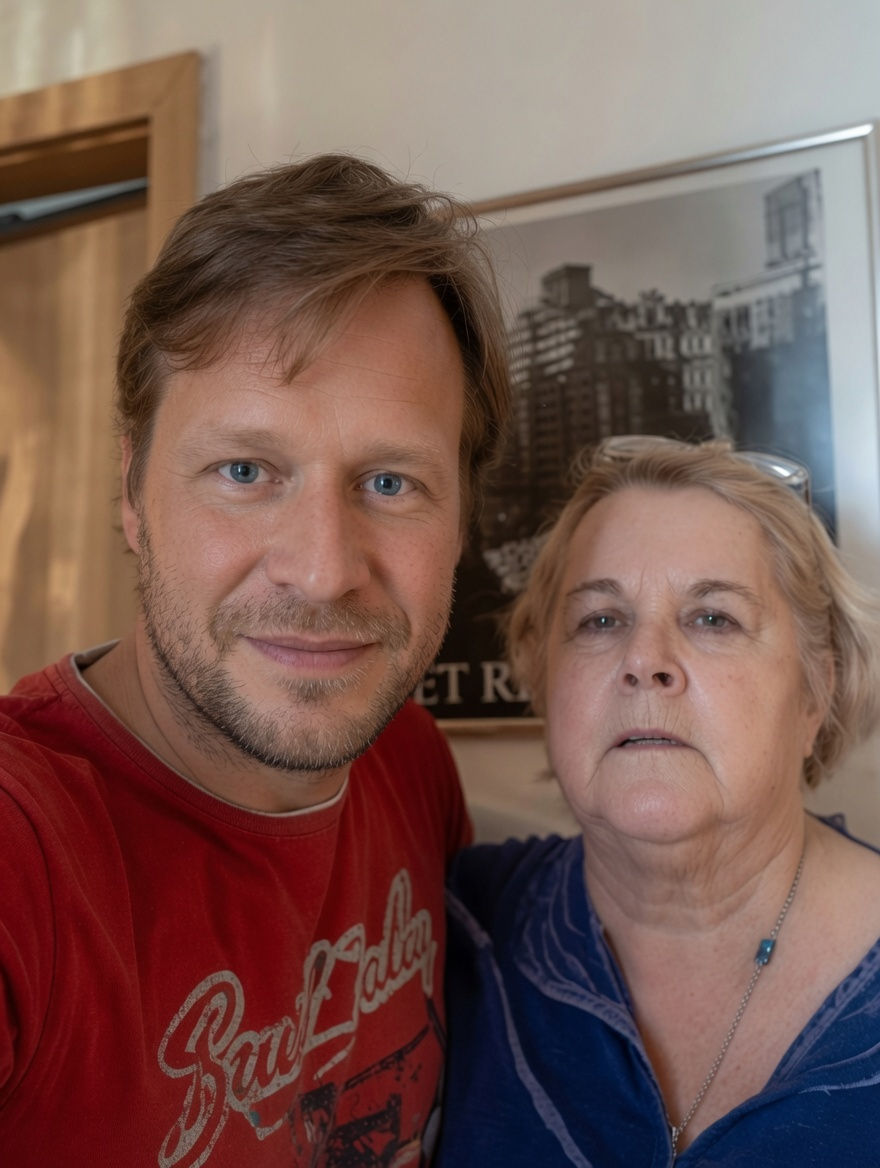
Two Homes
A framed photograph of Václav Havel, the former President of the Czech Republic, hung on the wall of her apartment.
Beneath it was a personal letter of thanks.
After devastating floods struck the Czech Republic in the late 1990s, Anna organized a charity concert in Reykjavík and donated the proceeds to help affected communities. The letter was more than a formal acknowledgement. It was a reminder of the connection she felt to a country she knew mostly through family stories and inherited memory.
Like her father before her, she belonged to two places at once.
Laughter, Brennivín, and a Rumored Lover
Anna loved Becherovka, the Czech herbal liqueur that I occasionally brought with me from home. She jokingly described it as medicine.
In return, she always offered me Brennivín and Tópas, two Icelandic classics. Years earlier, I had made the mistake of admitting that I wanted to try them. Anna never forgot.
She also never let me forget the day I told her I wanted to eat hákarl, Iceland's infamous fermented shark. Her response arrived almost immediately — a mixture of horror, disbelief, and laughter. Hákarl, after all, is one of those foods that people talk about far more often than they actually eat.

Anna's generosity extended far beyond her circle of friends.
She loved animals, especially cats, and devoted a considerable amount of time to their welfare. For several years, she was actively involved with Kattavinafélag Íslands, the Icelandic Cat Protection Society, and even served as its chairwoman. She spoke publicly about the care of abandoned and neglected cats and believed that a society could be judged by the way it treated its most vulnerable creatures.
It suited her perfectly.
The same warmth she showed to friends, visitors, and complete strangers seemed to extend naturally to animals as well. Her home was shared with a beloved tomcat who appeared to consider himself the true owner of the apartment.
Looking back, it is difficult to separate Anna from that generosity. She simply had room in her heart for more beings than most people do.
Stories like these were endless.
Whenever Anna spoke about her family, she often started laughing before she reached the punchline.
One day she told me about a conversation with her mother, who had asked who I really was.
Anna's spontaneous answer?
“My lover.”
Years later, she laughed so hard while retelling the story that she could barely finish it.
Perhaps what amused her most was how naturally the answer had come to her at the time.
That was Anna.
She could be serious and thoughtful, yet endlessly playful. She moved comfortably between journalism, literature, and public life, but rarely spoke about her own accomplishments. Only much later did I learn about her award-winning investigative work and the important role she had played in Icelandic media.
She never saw these things as achievements worth boasting about.
They were simply part of her work.
Remembering Anna
Whenever I return to Iceland today, I find myself thinking of Anna in places she once showed me.
On the roads crossing the lava fields of Snæfellsnes.
In the streets of Reykjavík.
In conversations that drift toward family stories, Czech roots, or Icelandic folklore.
Her father left Zlín and found a new home in Iceland.
Anna spent her life connecting those two worlds with a grace that seemed as natural as her laughter.
And perhaps that is why, even after all these years, I still think of her so often.
Find more articles about Iceland HERE
Including stories about Icelandic history, sagas, current events, nature, and the total solar eclipse of August 12, 2026.

About the Author
Iceland has fascinated me for many years. Over the course of numerous journeys across the island, I have driven tens of thousands of kilometers, experienced storms that changed travel plans within minutes, and witnessed days when choosing the right route meant discovering places that most visitors never see. I documented many of these experiences in my documentary film Island in the North.
Through this website, I share practical travel advice, up-to-date information, and firsthand experiences from the field to help others explore Iceland more safely and gain a deeper understanding of its unique landscapes and ever-changing nature.


Komentáře