
ICELANDIC WINDSTORMS: WHEN THE WEATHER BECOMES A MATTER OF LIFE AND DEATH

In October, Iceland was hit by an exceptionally deep low-pressure system. Wind gusts reached 205 km/h, and the storm caused damage, flooding and travel disruption in parts of the south and east of the island. Weather like this can change even experienced travellers’ plans within a matter of hours. We learned that firsthand in 2010, when we travelled to see a freshly erupted volcano. We were lucky: by the following day, the area had become virtually inaccessible because of the storm.

On 14 October 2026, the Icelandic Meteorological Office recorded a wind gust of 56.9 metres per second—approximately 205 km/h—at a weather station near Hvammur, beneath Eyjafjöll. At the same time, atmospheric pressure at Fagurhólsmýri fell to 934.6 hPa, the lowest October reading in the station’s recorded history.
The storm brought powerful winds, heavy precipitation, snowfall and high seas. It caused material damage in several locations, including Siglufjörður in the north. Around Vík on the south coast, seawater reached houses and flooded roads. Meteorologists issued a total of 12 yellow and four orange weather warnings for wind, rain and snow.
Nevertheless, the Icelandic Meteorological Office noted that, in terms of the geographical extent of the strong winds, the storm was not among the most severe October storms in the island’s history. A record-low pressure reading at a single weather station does not, by itself, mean that a storm was the most destructive ever to hit the country.
How often does Iceland experience winds this powerful? And why can the island’s weather be so unpredictable that it sometimes determines whether people return safely from an expedition?
When We Set Out to See Fresh Lava in 2010
In 2010, a friend and I travelled to Iceland to film the economic crisis that had hit the country hard, as well as the volcanic eruption at Fimmvörðuháls. For several days, the volcano sent fountains of lava into the air, attracting visitors eager to witness the extraordinary spectacle firsthand.
We reached the crater in a huge off-road vehicle known as a superjeep. The journey across the glacial terrain took several hours. Our reward was a view of freshly erupted lava and the intense heat radiating from it. This was not some distant landscape watched through a camera lens. We could feel the heat right there on the ground.

We returned to our hotel in Skógar after midnight. We had been fortunate to enjoy exceptionally favourable weather, which allowed us to reach the crater and make our way back safely.
By the following morning, however, everything had changed. A storm had swept across the area, and conditions had deteriorated so badly that it was no longer possible to reach the eruption. We had our footage and the experience we had come to Iceland for. Others hoping to see the volcano had to accept that their journey would end before it had properly begun.
A few days later, on 14 April, a second eruption began beneath the Eyjafjallajökull ice cap. The interaction between magma, ice and water triggered explosive activity and produced vast quantities of fine volcanic ash. Winds carried the ash far from the volcano, severely disrupting air travel across Europe.
The events of spring 2010 revealed two very different sides of Iceland’s natural environment: a spectacular display that people travelled from around the world to witness, and conditions capable of making the area inaccessible in a matter of hours.


When a Trip to a Volcano Becomes a Fight for Survival
The danger at the time came not only from the eruption itself. The weather also played a part, as did the fact that some visitors underestimated the mountainous terrain and winter conditions.
In April 2010, a group of three tourists travelled to the Fimmvörðuháls eruption. Their vehicle ran out of fuel in a remote area, leaving them in difficulty without adequate equipment or supplies. They set off on foot in an attempt to find their way back.
They initially called the rescue services for help but later cancelled their request. When the group failed to return, relatives alerted the authorities. The search ended tragically: a man and one woman were found dead, while the third woman was found alive but suffering from severe hypothermia. According to contemporary reports, the man died several kilometres from the vehicle, while the woman’s body was found near the car.
The incident was a reminder that good hiking boots and the determination to get as close as possible to a natural attraction are not enough in Iceland. Remote mountain terrain can be dangerous even for experienced travellers. When the weather deteriorates, the return journey can become far more difficult than the journey out.
During the eruption, many other people also tried to reach the site on foot. Contemporary reports described rescue teams assisting exhausted and inadequately equipped visitors who had got into trouble in the challenging terrain. Some had failed to appreciate that reaching the volcano was not an ordinary sightseeing walk.
How Often Does Iceland Experience Severe Windstorms?
Iceland is exposed to air currents sweeping across the North Atlantic and to frequent low-pressure systems. Wind is therefore a regular feature of the country’s weather, although its strength varies considerably by location and season.
An analysis of wind conditions between 2000 and 2025, published by the Icelandic travel website Guide to Iceland, draws on long-term weather-station measurements and modelled daily wind-gust data. It shows that strong winds are far from unusual in some exposed parts of the island.
The study defines a windy day as one on which gusts reach at least 90 km/h. Winds of this strength can be particularly dangerous when driving, on exposed coastlines or in places where vehicles are vulnerable to crosswinds.
Location | Average number of days per year with gusts of at least 90 km/h |
Vík and the surrounding south coast | Approximately 27 |
Stórhöfði, Westman Islands | Approximately 22 |
Dalatangi, east coast | Approximately 22 |
Reykjavík | Approximately 13–14 |
Keflavík | Approximately 13–14 |
Ísafjörður | Approximately 6 |
Akureyri | Fewer than 4 |
Source: Guide to Iceland, analysis of wind conditions between 2000 and 2025. These figures are long-term averages based on modelled daily data; they do not represent the number of days with continuous gale-force conditions.
The differences are substantial. On the south coast, there are on average more than two dozen days a year with gusts of at least 90 km/h. In Akureyri in the north, such days are considerably less frequent. The town lies at the head of a long fjord, with the surrounding terrain providing some shelter from certain wind directions.
These figures do not, however, tell us how often winds exceed 150 or 200 km/h. Those are far more extreme conditions, and their frequency cannot be inferred directly from this statistic. The October gust of 205 km/h therefore belongs to a different category from the windy days that recur throughout the winter in exposed locations.
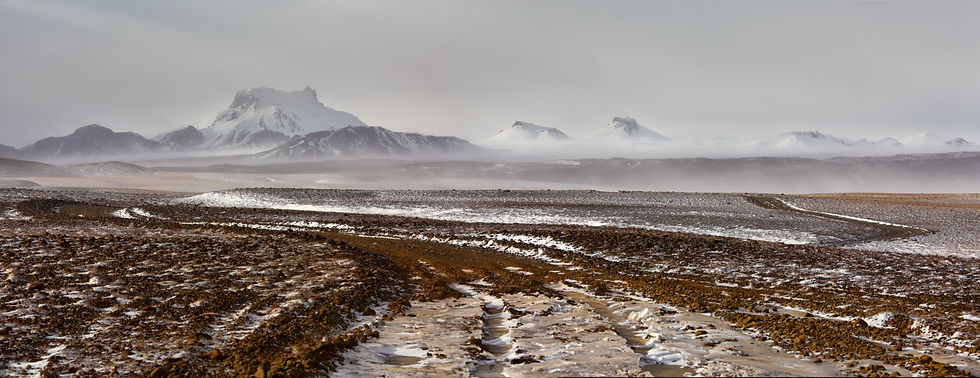
How to Avoid a Windstorm in Iceland—and What to Do If One Catches You
Icelandic weather can change travel conditions within a matter of hours. Staying safe is not just about having suitable clothing and the right equipment. It also means checking forecasts and warnings before setting out. A sunny morning does not guarantee that conditions will remain safe in the afternoon.
Check Three Sources Before You Travel
Iceland has its own meteorological service, which issues warnings about dangerous weather. The Icelandic Meteorological Office, known in Icelandic as Veðurstofa Íslands, issues warnings for specific areas covering strong winds, heavy precipitation, snowfall and other hazardous conditions.
Before and during your journey, check these three official sources:
Weather forecasts and warnings: Icelandic Meteorological Office
Road conditions, traffic restrictions and closures: Icelandic Road and Coastal Administration
Safety advice for travellers: SafeTravel Iceland
Checking the forecast for Reykjavík or the place where you spent the night is not enough. Conditions can vary significantly between neighbouring areas. Mountain passes, exposed coastlines and remote parts of the interior are particularly vulnerable.
If meteorologists issue a warning and advise against travelling, the safest choice is to change your plans, stay at your accommodation or wait for conditions to improve. A closed road is not an invitation to find a detour, and bad weather is no reason to assume that a four-wheel-drive vehicle will get you through safely.
What to Do If a Windstorm Catches You on a Hike
Strong winds can be dangerous in open terrain even for people with good clothing and hiking experience. A sudden gust can knock you off balance, make navigation difficult and severely reduce visibility in rain or snow.
Do not push on at all costs. If conditions deteriorate rapidly, turn back in good time or seek safe shelter. Insisting on reaching a volcano, waterfall or viewpoint can have fatal consequences.
Avoid exposed terrain. Ridges, mountain passes, cliffs and open coastlines leave you exposed to powerful gusts. Unexpected waves pose an additional danger near the sea.
Do not attempt a dangerous crossing. If wind, snow or poor visibility prevent you from identifying a safe route, do not press on.
Protect yourself against hypothermia. Wind increases heat loss from the body. Add another layer, protect your head and hands, and try to reach a sheltered spot or safe refuge.
Call 112 in an emergency. Give your location, explain the conditions and follow the instructions of the rescue services. Do not assume you will be able to reach safety on foot.
Before setting out on a demanding hike, leave someone your route and expected return time. Mobile phone coverage may also be unavailable in remote areas.
We Had to Crawl Back to the Car
I have experienced a similar situation firsthand in Iceland. At the top of the Dýrhólaey cliffs on the south coast, a violent windstorm once caught our group so suddenly that we had to crawl on all fours to get back to our car. The wind seemed to come out of nowhere, and it was so powerful that walking normally was virtually impossible.
Experiences like this show why it is unwise to judge conditions solely by what the weather looks like around you. Winds can be much stronger in exposed locations, and conditions can change rapidly. If you find yourself in a similar situation, do not continue towards a viewpoint or risk taking more photographs. Your priority is to reach shelter or return to your vehicle as safely as possible, without risking a fall or getting too close to the edge of a cliff.
What to Do If a Windstorm Catches You in Your Car
Strong crosswinds can push a vehicle out of its lane. Vans, motorhomes, vehicles towing trailers and other vehicles with large side profiles are particularly vulnerable. Sudden gusts can also catch drivers by surprise when they emerge from a mountain pass or drive out from behind a natural windbreak.
If conditions deteriorate:
Slow down and increase your following distance. Keep a firm grip on the steering wheel and be prepared for sudden gusts.
Do not stop in a dangerous location. If you can safely reach a suitable stopping place nearby, do so. Avoid stopping in a traffic lane or on an exposed stretch where another vehicle could hit you.
Do not try to drive through a storm if it is no longer safe. Pull over in a safe place away from traffic if one is available. If the surroundings are dangerous and you cannot continue safely, call for assistance.
Take care when opening the car door. A powerful gust can wrench it from your hand or damage it. Consider the wind direction and hold the door firmly when getting out.
If you become stranded, prioritise your safety. If the vehicle is in a safe place and there is no immediate danger, it is often better to stay inside than to venture out on foot into the storm. In an emergency, call 112 and give your location.
Never drive onto a closed road. Even a four-wheel-drive vehicle cannot guarantee safety in extreme winds, heavy snow or poor visibility.
Do Not Ignore Weather Warnings—Especially When It Comes to Insurance
Before travelling, read the terms of your travel insurance and rental-car insurance. Some policies impose specific conditions or exclusions for weather-related damage to vehicles, including damage caused by sand or volcanic ash. The extent of cover varies from policy to policy.
The mere existence of a weather warning does not automatically invalidate your insurance. However, deliberately ignoring official warnings, driving onto a closed road or breaching the terms of your policy may have serious consequences when an insurer assesses a claim.
The rule in Iceland is simple: the best way to deal with a windstorm is to avoid getting caught in one. You can postpone an excursion, change your route or return to a waterfall or volcano the following day. No viewpoint is worth risking your health or your life.
Winter Is Generally Windier Than Summer
Long-term data indicate that February is, on average, the windiest month. The mean wind speed at the weather stations included in the analysis reaches approximately 23 km/h. July is generally the calmest month, with the average dropping to around 16 km/h.
This does not mean that severe storms cannot occur in summer. The difference lies in their frequency and in the likelihood of encountering days with exceptionally strong gusts.
In Vík, February averages approximately five days with gusts of at least 90 km/h. In July, days of this kind are almost absent from the long-term average. For travellers planning a trip with a fixed itinerary, this is an important distinction: winter travel may require more time in reserve and a willingness to change plans according to the weather.
Wind strength also cannot be judged solely from the forecast for the nearest town. It can be much stronger in open countryside, mountain passes and along the coast than in sheltered areas. Relatively calm conditions in Reykjavík therefore do not guarantee that it is safe to head for the south coast or the interior.
Why Can Icelandic Winds Be So Dangerous?
Iceland’s location in the North Atlantic plays a major role. Deep low-pressure systems frequently develop and move across the region, bringing rapid changes in atmospheric pressure, strong winds, precipitation and sometimes snow or high waves.
The terrain also affects local conditions. Open plains, mountain passes and exposed coastlines offer little protection from the wind. In some locations, the shape of the landscape can further intensify air currents.
Volcanic material adds another hazard. In dry areas, strong winds can lift fine sand and dust from volcanic sediments. Visibility can deteriorate rapidly, while airborne particles can affect both vehicles and people outdoors.
Crosswinds pose an additional danger to drivers. Powerful gusts can push a vehicle off course, particularly on exposed roads and bridges. Vehicles with large side profiles are at greater risk. That is why it is essential to heed warnings, avoid pressing on at all costs and never get out of a vehicle simply to take a photograph when conditions are dangerous.
What Did the October Storm Remind Us?
The recent windstorm showed that even an exceptionally deep low-pressure system is not necessarily the worst storm in the island’s history by every measure. The October record for low atmospheric pressure was broken at Fagurhólsmýri, wind gusts near Hvammur reached 205 km/h, and very strong gusts were recorded at numerous weather stations. Yet an assessment of the geographical extent of winds exceeding 20 m/s showed that the storm was not among the most widespread October events.
This highlights the difference between a record reading at one location and the overall intensity of a storm. A windstorm in Iceland cannot be described by a single number. Its impact depends on the strength and movement of the low-pressure system, wind direction, precipitation, waves and the degree to which individual areas are exposed.
For travellers, the lesson is straightforward: itineraries must remain flexible. Check the latest warnings from the Icelandic Meteorological Office and current road conditions before setting out. If the weather deteriorates, postponing the journey or choosing a different route may be the safest decision.
In 2010, we reached the crater thanks to an experienced driver, a suitable vehicle and extraordinary luck with the weather. Just one day later, the situation had changed. Sometimes, a matter of hours determines whether you return with unique footage or find yourself in trouble with potentially serious consequences.
Iceland’s untamed nature is part of what makes it so compelling. Wind is inseparable from that landscape. Respecting its power is not excessive caution; it is a basic condition of travelling safely.

About the Author
Iceland has fascinated me for many years. Over the course of numerous journeys across the island, I have driven tens of thousands of kilometers, experienced storms that changed travel plans within minutes, and witnessed days when choosing the right route meant discovering places that most visitors never see. I documented many of these experiences in my documentary film Island in the North.
Through this website, I share practical travel advice, up-to-date information, and firsthand experiences from the field to help others explore Iceland more safely and gain a deeper understanding of its unique landscapes and ever-changing nature.
Sources
Icelandic Meteorological Office – “Lowest October Atmospheric Pressure Ever Recorded.” Report published on 15 October 2026 about the storm of 14 October, the record-low atmospheric pressure, recorded wind gusts and the extent of weather warnings. Read the report
Guide to Iceland – “The Windiest and Least Windy Months in Iceland: A 26-Year Wind Study.” An analysis of wind conditions between 2000 and 2025, comparing locations and the frequency of days with gusts of at least 90 km/h. Read the study
Visit Iceland – “2010 Eyjafjallajökull Eruptions.” Background information on the Fimmvörðuháls eruption from March to April 2010 and the subsequent eruption beneath the Eyjafjallajökull glacier. Read the article
Yle / AFP – “Two Volcano Tourists Die in Iceland.” A contemporary report published on 7 April 2010 about the deaths of two tourists and the rescue of a third person after the group encountered difficulties during a trip to the eruption site. Read the report
RÚV – “Update on Eruption and Falling Ash.” A contemporary report from April 2010 about hazardous conditions around the eruption, falling volcanic ash and the closure of the area to the public. Read the report


Komentáře