
HOW MUCH DOES IT COST TO SEE THE 2026 TOTAL SOLAR ECLIPSE IN ICELAND?

Aktualizováno: 30. 6.
Flights, accommodation and car rental prices are rising rapidly as thousands of eclipse chasers from around the world prepare to travel to Iceland for the total solar eclipse on 12 August 2026. Here's what you can expect to pay.
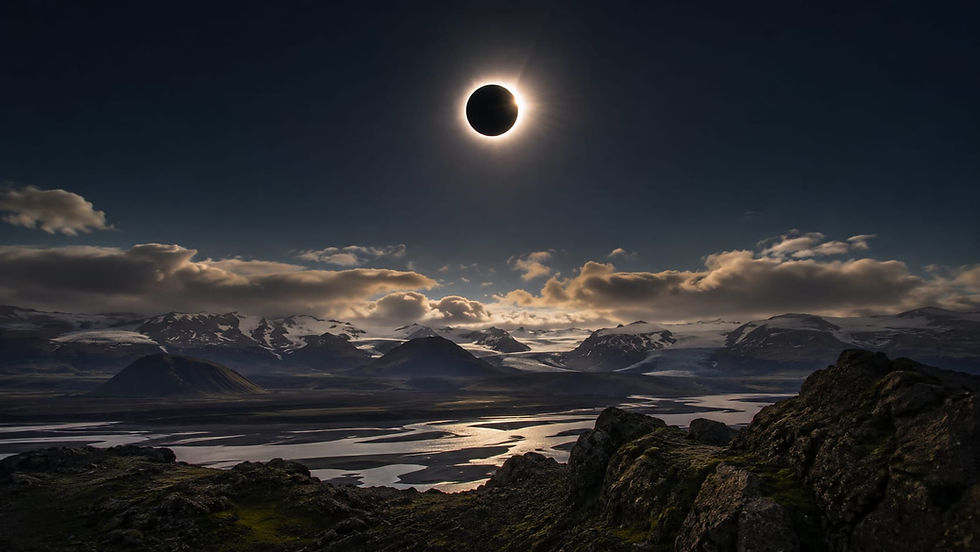
On August 12, 2026, the path of totality will cross the North Atlantic, placing Iceland among the best locations on Earth to witness a total solar eclipse. For astronomers, photographers, and travelers alike, it will be one of the most accessible total eclipses visible from Europe in decades.
Yet while many imagine a magical journey into Iceland’s wild landscapes, the reality just 65 days before the event looks very different. Travelers are no longer searching for the perfect viewing spot. Instead, they are asking more practical questions:
Can I still find accommodation? Are rental cars available? And how much will this trip actually cost?
What once seemed like a distant astronomical event has become a logistical challenge.
🍔 Everyday Costs in Iceland
Item | Price (€) | Price (CZK) |
☕ Coffee | 4–6 € | 100–150 CZK |
🥪 Sandwich | 8–15 € | 200–375 CZK |
🍔 Burger & Drink | 18–25 € | 450–625 CZK |
🍽️ Restaurant Meal | 30–60 € | 750–1,500 CZK |
🍺 Beer | 8–12 € | 200–300 CZK |
Sources:
💡 How to Save Money on Food
Many visitors spend far more than necessary in restaurants, which are among the most expensive in Iceland.
A much cheaper option is shopping at local supermarkets such as:
Bónus
Krónan
Nettó
Preparing your own meals can reduce your daily food expenses to roughly one-third of what you would spend in restaurants.
💰 How Much Does a Trip to the Eclipse Cost? (Quick Summary)
If you are planning to travel to Iceland for the total solar eclipse on 12 August 2026, here are the approximate costs for two people:
✈️ Flights: €700–900 (CZK 17,500–22,500)
🏨 Accommodation: €1,200–2,500 (CZK 30,000–62,500)
🚗 Car Rental: €1,000–1,800 (CZK 25,000–45,000)
🍽️ Food: €500–900 (CZK 12,500–22,500)
Estimated total: €3,400–6,100 (CZK 85,000–152,500) for one week.
🧭 An Island Where Availability Matters More Than Price
The best viewing conditions are expected in western Iceland, particularly on the Snæfellsnes Peninsula and in parts of the Westfjords. These regions lie directly within the path of totality and offer some of the longest eclipse durations on the island.
Unfortunately, astronomers, eclipse chasers, photographers, and travelers from around the world have reached the same conclusion.
As a result, many hotels, guesthouses, and vacation rentals were booked months—or even years—in advance. Travel reports suggest that some of the most desirable properties in the path of totality had little availability left more than a year before the eclipse.
According to travel industry analyses, western Iceland is among the most sought-after eclipse destinations anywhere along the eclipse path.
Source: Condé Nast Traveler – The Ultimate Guide to Traveling for the 2026 Total Solar Eclipse: https://www.cntraveler.com/story/the-ultimate-guide-to-traveling-for-the-2026-total-solar-eclipse
My Experience
Having travelled extensively around Iceland, I've experienced the weather on the Snæfellsnes Peninsula change from completely overcast skies to almost cloudless conditions in less than thirty minutes. That's why I always recommend keeping your plans as flexible as possible on eclipse day.
Today, the biggest challenge is often no longer the price of accommodation.
It's whether any accommodation is still available at all.

🏨 Reykjavík Is Becoming Eclipse Base Camp
While many smaller towns in western Iceland are approaching full occupancy, Reykjavík is increasingly becoming the operational hub for eclipse travelers.
At first glance, this may seem surprising. The Icelandic capital is not expected to offer the longest duration of totality, and many visitors would prefer to stay closer to the eclipse path.
However, Reykjavík remains the largest concentration of hotels, guesthouses, hostels, restaurants, and transportation services in the country.
For many visitors, it is becoming the safest base from which to monitor weather forecasts and travel toward clearer skies on eclipse day.
Prices already reflect this growing demand.
Budget travelers can still find hostel beds, while hotel rates have climbed significantly compared to a typical August season.
💸 Accommodation Costs During Eclipse Week
Accommodation Type | Price per Night (€) | Price per Night (CZK) |
🛏️ Hostel | 120–220 € | 3,000–5,500 CZK |
🏡 Guesthouse | 180–400 € | 4,500–10,000 CZK |
🏨 Hotel | 300–600 € | 7,500–15,000 CZK |
⛺ Campsite | 20–40 € | 500–1,000 CZK |
Sources:
Booking.com (searches for Reykjavík, Borgarnes, Snæfellsnes and Westfjords, August 2026)
Airbnb Iceland
Condé Nast Traveler Eclipse Guide
Icelandia Eclipse Accommodation Guide
Which Area Should You Choose?
Area | Main Advantage |
Reykjavík | Largest selection of accommodation |
Borgarnes | Excellent location |
Snæfellsnes | Best eclipse viewing opportunities |
Westfjords | Longest duration of totality |
🚗 Transportation May Become the Real Challenge
Many travelers focus on securing accommodation first. However, experiences from previous major eclipses suggest that transportation can become an equally significant obstacle.
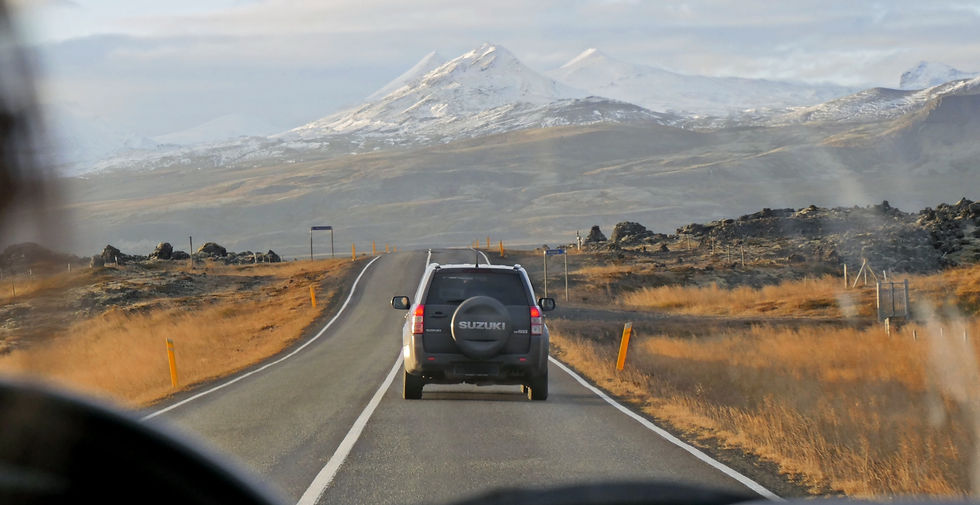
Outside Reykjavík, Iceland's road network is relatively limited. Much of western Iceland was never designed to accommodate tens of thousands of travelers moving toward the same destinations on the same day.
Discussions among travelers increasingly warn of severe traffic congestion in the Snæfellsnes region and along routes leading into the Westfjords.
That is why having a rental car may become one of the most important decisions of your entire trip.
On eclipse day, the ability to drive toward clear skies could make the difference between witnessing totality and staring at a cloud-covered horizon.
💸 Rental Car Prices (Summer 2026)
Vehicle Type | Price per Day (€) | Price per Day (CZK) |
🚗 Small Car | 90–140 € | 2,250–3,500 CZK |
🚙 SUV / 4x4 | 150–300 € | 3,750–7,500 CZK |
🚐 Campervan | 250–450 € | 6,250–11,250 CZK |
Sources:
What Would I Choose?
If I were travelling to Iceland specifically for the eclipse, I would choose a mid-size SUV rather than a small economy car.
Why?
Greater comfort.
More flexibility if changing weather requires driving to another location.
That recommendation comes from my own experience travelling around Iceland.
🌥️ The One Factor Nobody Can Control
There is one variable that ignores every reservation, itinerary, and budget.
Iceland's weather is famously unpredictable. Clear skies can become overcast within minutes, while seemingly poor conditions can improve just as quickly.
Experienced eclipse travelers often recommend remaining flexible and avoiding a rigid viewing plan tied to a single location.
Ironically, having a rental car and the freedom to move may prove more valuable than staying in a premium hotel directly inside the path of totality.
As many travelers have noted:
"Even if everything is perfectly planned, Iceland weather can still ruin eclipse viewing in minutes."
Source: Reddit – r/IcelandTravel https://www.reddit.com/r/IcelandTravel/comments/1s9q8bc/
🌥️ How Cloudy Is Western Iceland in August?
Long-term climate records show that average cloud cover over western Iceland in mid-August is around 70%.
At first glance, that may sound discouraging. In reality, however, this figure refers to the average proportion of the sky covered by clouds rather than the number of completely overcast days.
Icelandic weather is famously unpredictable. Low clouds can disappear within minutes, while clear skies may become overcast just as quickly.
That is why experienced eclipse chasers recommend monitoring forecasts from the Icelandic Meteorological Office during the days leading up to the eclipse and remaining as flexible as possible on eclipse day.
Driving just 30 kilometres (19 miles) can sometimes be enough to find completely different sky conditions.
📊 Interesting Fact
Meteorological observations from Reykjavík show that sunshine averages around 32% of daylight hours during August, corresponding to average cloud cover of approximately 71%.
However, long-term climate statistics cannot predict conditions on a particular day. Rapid local changes in cloud cover are common across Iceland and could ultimately determine whether you witness the eclipse beneath clear skies or behind thick clouds.
👉 Want to know which parts of Iceland statistically offer the best chance of clear skies during the eclipse? Read our detailed regional weather analysis.
💰 How Much Does an Iceland Eclipse Trip Cost?
Just a few years ago, a week-long trip to Iceland was considered an expensive—but manageable—European adventure.
For eclipse week in 2026, the numbers look very different.
A couple planning a seven-day eclipse trip today should expect significantly higher costs than during a normal summer season.
Flights, accommodation, transportation, and food expenses have all been affected by increased demand.
💸 Estimated Cost Breakdown (2 People, 7 Days)
Category | Cost (€) | Cost (CZK) |
✈️ Flights | 700–900 € | 17,500–22,500 CZK |
🏨 Accommodation | 1,200–2,500 € | 30,000–62,500 CZK |
🚗 Rental Car | 1,000–1,800 € | 25,000–45,000 CZK |
🍔 Food & Drinks | 500–900 € | 12,500–22,500 CZK |
💰 Total | 3,400–6,100 € | 85,000–152,500 CZK |
Sources: Estimated using current airfare pricing from Icelandair and PLAY Airlines, accommodation searches on Booking.com and Airbnb, rental car pricing from Blue Car Rental, Lotus Car Rental and Lava Car Rental, and average travel costs reported by Iceland travel budget guides.
🌑 An Island Facing an Unprecedented Tourism Surge
Iceland has always been a destination where travelers feel close to nature. In August 2026, however, it may also become one of the clearest examples of how a rare natural event can reshape travel patterns across an entire country.
Millions of people dream of seeing a total solar eclipse at least once in their lives.
Few eclipses, however, will be as accessible to European travelers as the one crossing Iceland in 2026.
That is why planning an eclipse trip today feels less like booking a vacation and more like preparing for a once-in-a-lifetime expedition.
Not a search for the perfect hotel.
Not a search for the best viewpoint.
But a race to be in the right place, at the right moment, when daylight disappears and Iceland falls into darkness.
Editor's Note
All prices shown are approximate ranges collected in June 2026 and are subject to change. Availability and pricing for accommodation, rental vehicles, and flights may fluctuate significantly as the eclipse approaches.

About the Author
Iceland has fascinated me for many years. Over the course of numerous journeys across the island, I have driven tens of thousands of kilometers, experienced storms that changed travel plans within minutes, and witnessed days when choosing the right route meant discovering places that most visitors never see. I documented many of these experiences in my documentary film Island in the North.
Through this website, I share practical travel advice, up-to-date information, and firsthand experiences from the field to help others explore Iceland more safely and gain a deeper understanding of its unique landscapes and ever-changing nature.


Komentáře