
THE FIRST CAR IN ICELAND: THE RUMBLING WONDER THAT WAS SUPPOSED TO BEAT THE GIANTS

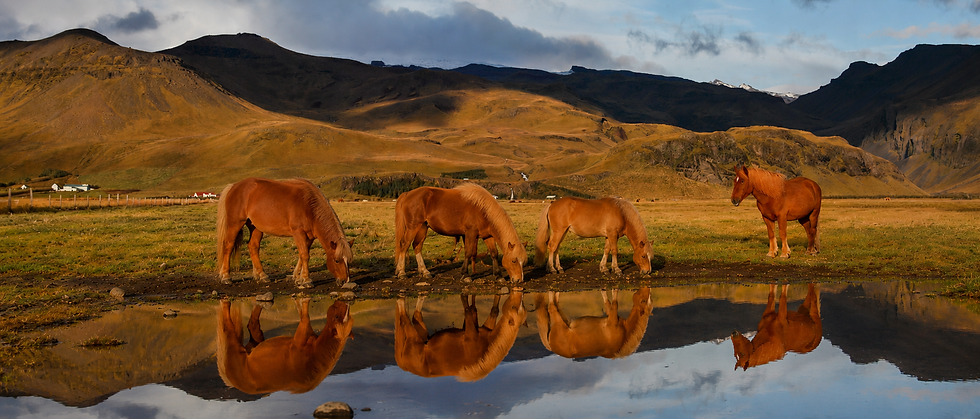
At the beginning of the 20th century, Iceland was still a country of horses. Anyone who needed to travel between settlements rode a horse. Anyone transporting goods needed horses and carts. And anyone venturing beyond the few main routes had to reckon with a landscape where there was often no proper road at all. Then a strange machine appeared in Reykjavík. It had wheels, an engine, and made such a racket that one contemporary journalist compared its journey to Ása-Thór himself setting out eastward to beat the giants.
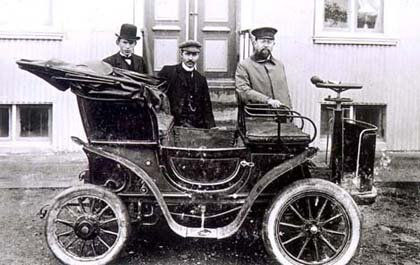
It was a German-built Cudell, brought to Iceland in June 1904 by merchant Ditlev Thomsen. The Icelandic parliament, Alþingi, contributed 2,000 krónur toward its purchase. According to later historical sources, the automobile had approximately six to seven horsepower.
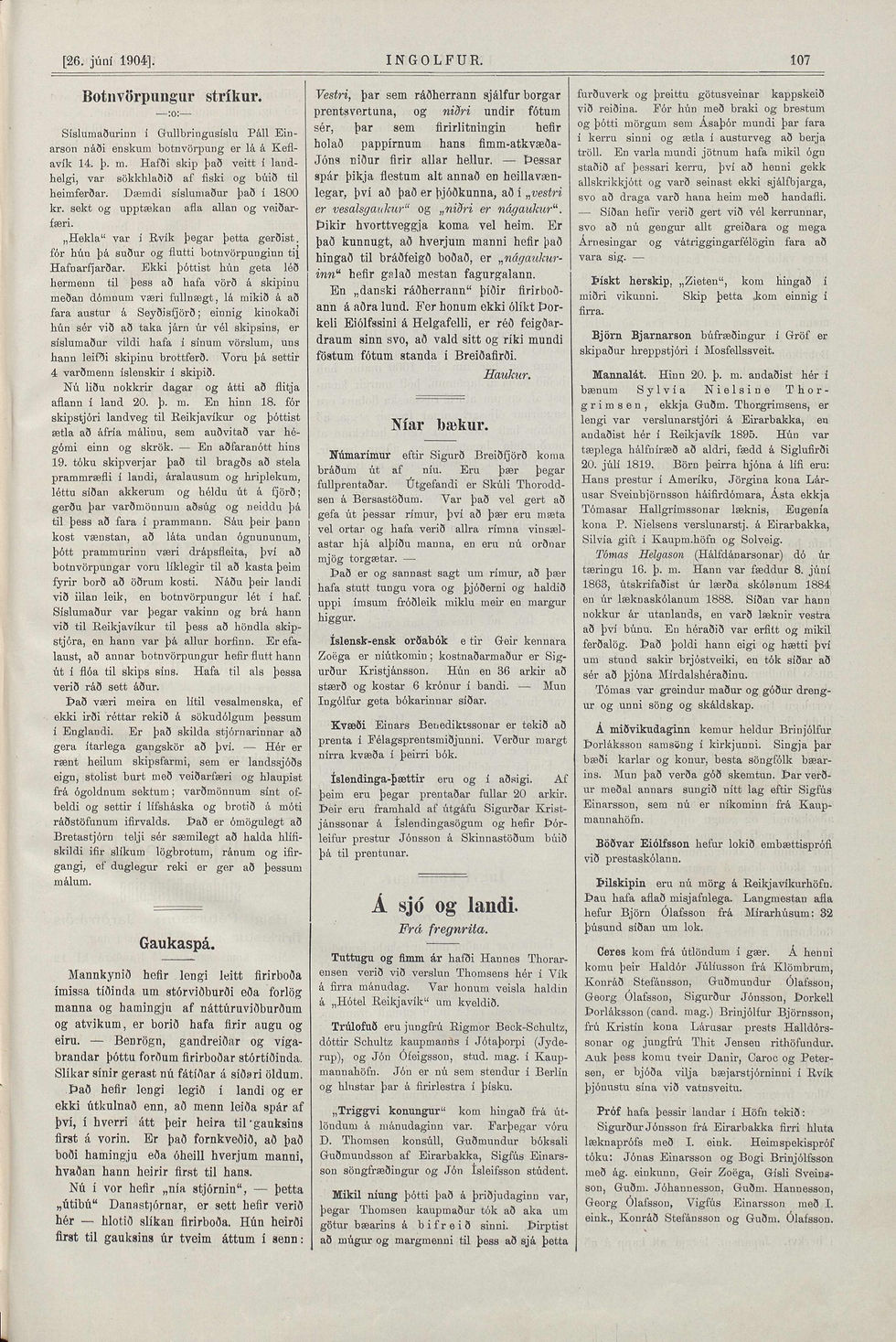
We have a remarkably interesting contemporary account of its arrival. The newspaper Ingólfur, in its edition of June 26, 1904, published a short report about one of Thomsen's first drives through the streets of Reykjavík. The report is brief, but perfectly captures the astonishment, amusement, and slight mockery that the new machine inspired among the city's inhabitants.
It also reveals something important: the automobile did not arrive in a country of roads. It arrived in a country of horses.
HOW DID PEOPLE TRAVEL IN ICELAND BEFORE CARS?
For today's visitor to Iceland, this may be the most fascinating part of the story. When we leave Reykjavík for the south today, we have an asphalt road, bridges, road signs, and modern cars ahead of us. In 1904, none of that existed.

Iceland had already seen the first systematic attempts to build roads, but their purpose was quite different. A road law passed in 1894 initiated the construction of routes intended primarily for horse-drawn carts carrying loads. Important routes included, for example, the road from Reykjavík eastward through Árnessýsla to Eyrarbakki.
The roads of the time were also nothing like today's roads. They were not asphalt surfaces with clearly defined lanes. Many routes were more like improved tracks through the landscape, along which riders and horse-drawn carts could travel.
The horse had an enormous advantage in such an environment. It could continue along rocky tracks, cope with steep climbs, and pass through places where a car would immediately come to a halt. Iceland also had a centuries-old tradition of travelling on horseback, and local people knew exactly how to move through the difficult terrain.
The automobile, by contrast, depended on the quality of the road.
And that was one of the main problems Thomsen's Cudell encountered.

THE FIRST ROADS FOR HORSE-DRAWN VEHICLES
Road construction in Iceland began developing more systematically during the final years of the 19th century. One of the important goals was to connect Reykjavík with areas in the south and east of the country and make it possible to transport people and goods by horse-drawn vehicles.
The year 1896 was another important milestone. That year saw the first journey by horse-drawn carriage between Reykjavík and the south coast. The carriage, known as the barnavagninn, or “children's carriage,” transported children from an earthquake-affected area to Reykjavík.

This is quite a remarkable detail. Just eight years before the arrival of the first automobile, the route between Reykjavík and southern Iceland was still such a new undertaking that the passage of a horse-drawn carriage was considered a noteworthy event.
And it was along these roads that Iceland's first automobile would set out a few years later.
REYKJAVÍK – EYRARBAKKI: THE SAME ROUTE, A DIFFERENT ERA
Thomsen's automobile did not remain confined to drives around Reykjavík. According to historical sources, it travelled south through Hafnarfjörður and across Hellisheiði, reaching the Eyrarbakki and Stokkseyri area.
Today, the journey from Reykjavík to Eyrarbakki is approximately 60 kilometres long and can be completed by car in less than an hour. For someone travelling in Iceland in 1904, however, the challenge was not simply the number of kilometres. The terrain was what mattered.
The route crossed difficult country and the mountain pass of Hellisheiði. While a horse could cope with such terrain relatively naturally, the first automobile encountered considerable difficulties. Historical sources state that Thomsen's car needed assistance on steeper sections.
This perfectly illustrates the difference between the two forms of transport. A horse could adapt to the road. The automobile needed the road to gradually adapt to it.
HOW LONG DID THE JOURNEY TAKE?
Here we need to be careful when making historical comparisons. We have not yet found a reliable contemporary source giving the exact duration of Thomsen's journey from Reykjavík to Eyrarbakki.
It would therefore be tempting to write, for example, that the journey took ten hours on horseback and six hours by automobile. But such a figure would suggest a degree of precision that our sources simply do not provide.
The more important point is something else. The first automobile may have been faster than a rider on horseback on a level stretch, but its advantage disappeared when it encountered a poor road, a steep climb, or a section unsuitable for motor vehicles.
Thomsen's Cudell therefore did not represent an immediate revolution in travel speed. It was rather the first experiment showing just how much Iceland would have to change if the automobile was ever to become established.
And change did indeed come.
How fast did Iceland's first automobile actually travel? A contemporary advertisement from 1905 gives us a surprisingly specific idea. According to the advertisement, Thomsen's automobile could travel from Reykjavík to Hraunsholt, approximately three-quarters of the intended route, in about two hours. If we use today's road network to make a rough estimate of the distance, around 15 kilometres, that gives an average speed of approximately 7–8 km/h. Iceland's first automobile was therefore certainly no speed machine on the roads of the time. Its average speed was closer to a brisk walk or a slow horse. And it still had to cope with the rough, unpaved roads, steep climbs, and mechanical failures of the time. The contemporary advertisement also suggested that after a change of driver, the vehicle began to make better use of its power.
JUNE 21, 1904: REYKJAVÍK SEES AN AUTOMOBILE IN ACTION
But let us return to Reykjavík. According to the contemporary report in Ingólfur, Thomsen began driving through the streets of the city on Tuesday, June 21, 1904, the day after the automobile arrived.
The newspaper wrote:
Mikil nýjung þótti það á þriðjudaginn var, þegar Thoinsen kaupmaður tók að aka um götur bæarins á bifreið sinni.
In English:
“It was considered a great novelty last Tuesday when merchant Thomsen began driving his automobile through the streets of the city.”
For the people of Reykjavík, this was an extraordinary event. The new machine attracted attention and people began gathering around it.
PEOPLE RAN AFTER THE CAR – AND CHILDREN RACED IT
The contemporary report continues:
Þyrptist að múgur og margmenni til þess að sjá þetta furðuverk og þreittu götusveinar kappskeið við reiðina.
“Crowds of people gathered to see this wondrous machine, and street urchins even tried to race it.”
This may be one of the best details in the entire story. The automobile was not merely a means of transportation. It was a spectacle.
People ran into the streets to see it, and children tried to keep up with it. For the inhabitants of Reykjavík in 1904, this was not a familiar technology arriving in a new model. It was a strange mechanical machine moving without a horse.
And it made quite a noise.
“AS IF ÁSA-THÓR WERE GOING TO BEAT THE GIANTS”
It was the sound of the automobile that inspired one of the most striking comparisons in the report:
Fór hún með braki og brestum og þótti mörgum sem Ásaþór mundi þar fara í kerru sinni og ætla í austurveg að berja tröll.
English translation:
“It went with rattling and cracking, and to many it seemed as though Ása-Thór were travelling there in his cart, heading east to beat the giants.”
To someone in 1904, the sound of an internal-combustion engine must have been truly unfamiliar. The journalist therefore did not use a technical comparison, but an image his readers would understand. The rattling automobile sounded like the cart of the god Thor.
But then comes the return to reality.
THE FIRST AUTOMOBILE HAD TO BE DRAGGED HOME
The contemporary report continues:
En varla mundi jötnum hafa mikil ógn staðið af þessari kerru, því að henni gekk allskrikkjótt og varð seinast ekki sjálfbjarga, svo að draga varð hana heim með handafli.
“The giants, however, would hardly have had much to fear from this cart, for it moved rather erratically and eventually became unable to move under its own power, so that it had to be dragged home by hand.”
And this is where the story of Iceland's first automobile becomes almost cinematic.
A new technological wonder is travelling through the streets, surrounded by a crowd of curious onlookers, with children racing alongside it. The engine rattles like the chariot of the god Thor.
And then the automobile stops.
The engine can no longer move it forward.
So people simply take hold of the vehicle and drag it home.
The first automobile journey in Reykjavík therefore ended in a way that would seem almost absurd today. There was no roadside assistance, no recovery truck and no repair service. There was simply human strength.
AFTER THE REPAIR, THINGS WENT BETTER
Thomsen did not give up on his experiment. The final part of the report states:
Síðan hefir verið gert við vél kerrunnar, svo að nú gengur allt greiðara…
“Since then, the engine of the vehicle has been repaired, so that it now runs more smoothly…”
The article then adds another ironic remark:
…og mega Árnesingar og vátryggingarfélögin fara að vara sig.
“…and the people of Árnessýsla and the insurance companies had better watch out.”
The journalist is clearly poking fun at the new invention. After the repair, the automobile was apparently capable enough that even the people of Árnessýsla and the insurance companies should begin to take notice.
It is a small joke, but it beautifully captures the contemporary attitude toward the automobile. It was not yet a symbol of progress that everyone automatically welcomed. It was a novelty, an attraction and a somewhat unpredictable machine.
WHY DIDN'T THE AUTOMOBILE REPLACE THE HORSE IMMEDIATELY?
Thomsen's Cudell ultimately proved to be a premature experiment. The automobile was capable of making remarkable journeys, including the trip toward Eyrarbakki and Stokkseyri, but operating it presented numerous problems. Iceland's difficult terrain was a major obstacle for an early motor vehicle, and on some stretches it needed assistance.
The car was eventually taken out of service and in 1908 it was sent back to Denmark.
It might therefore seem that the first automobile in Iceland had failed.
And in a sense, it had. The problem, however, was not the idea of the automobile itself. Iceland simply was not yet ready to become a motorized country.
Better roads, more suitable automobiles and greater experience with motor vehicles were all still needed.

1913 BROUGHT CHANGE
The real turning point came several years later. In 1913, Ford automobiles arrived in Iceland, and during the same period their practical importance began to grow. Historical sources also describe automobile journeys across Hellisheiði and toward the south coast.
This is where the difference from 1904 began to change dramatically.
In 1904, people ran after the automobile simply to look at it.
Less than a decade later, the automobile represented a means of transportation with a future in Iceland.
By 1920, 170 automobiles had already been imported into the country, mainly Ford and Overland vehicles.
The attraction was becoming transportation.
THE AUTOMOBILE ALSO BEGAN TO CHANGE THE ROADS
As the number of automobiles grew, the roads themselves began to change. Iceland's original routes had primarily been designed for horses and horse-drawn carts. Motor vehicles, however, placed much greater demands on surfaces, road width, bridges and gradients.
This created an interesting relationship between automobiles and roads. Automobiles needed better roads, but the growing number of automobiles also created pressure for those roads to be improved.
This can be seen particularly well on the road between Hafnarfjörður and Keflavík. Construction began in 1904, the same year the first automobile appeared in Iceland, but the road was not completed until 1912. The first automobile travelled along it in 1913.
First, a road was built for horse-drawn transport.
Then the automobile arrived.
HORSE VERSUS AUTOMOBILE
The horse had one fundamental advantage in Iceland: it was perfectly adapted to the environment. It could travel along tracks that a modern automobile would consider impassable. It did not require a road in today's sense, and its movement was not dependent on road quality in the same way as a motor vehicle.

The automobile, on the other hand, had the potential to be faster and to transport larger quantities of goods. But in order to make use of that advantage, it needed suitable infrastructure.
That is why it is not entirely accurate to say that the automobile simply “defeated” the horse.
The automobile and the road network evolved together.
The better the roads became, the more useful automobiles were. And the more automobiles Iceland had, the greater the pressure to improve the roads.
THE COUNTRY BEGAN TO SHRINK
The automobile ultimately changed more than the speed of travel. It also changed the way Icelanders perceived distance.
Places that had been connected for generations primarily by horse tracks began to draw closer together. Goods could be transported faster and more reliably. Travel between towns and the countryside became easier, and a network of routes gradually emerged that was no longer designed for horses, but for motor vehicles.
Iceland was beginning to shrink in terms of travel time.
And that is the real significance of Thomsen's automobile. Its greatest importance was not how many kilometres it could travel in 1904 or how fast it could move.
It was that it showed, for the first time, what the automobile might mean for Iceland.
ICELAND'S FIRST CAR SURVIVED IN PHOTOGRAPHS
Fortunately, we have more than just the contemporary newspaper report. Thomsen's automobile also survives in historical photographs.
Vegagerðin reproduces a photograph labelled “Fyrsti bíllinn hér á landi; Thomsonsbíllinn”, meaning “The first automobile in Iceland; Thomsen's automobile.” There are also other historical photographs of the vehicle featuring people connected with its operation.
The photographs are an important part of the story. When we look at Thomsen's Cudell today, it is difficult to imagine a crowd of curious Reykjavík residents gathering around it in 1904. To us, it is an old automobile. To them, it was a machine from the future.
And perhaps that is why an entire crowd gathered around it.

FROM THE RUMBLING CUDELL TO THE ICELAND OF THE AUTOMOBILE
In 1904, the automobile was an exotic novelty in Iceland. People gathered around it, children raced alongside it, and a journalist heard the chariot of the god Thor in its rattling engine. When it broke down, people had to drag it home.
A few years later, dozens and eventually hundreds of automobiles were being imported into Iceland. Better roads were being built, and horse routes were gradually becoming roads for motor vehicles.
The horse did not disappear overnight. In rural Iceland, it remained an important helper for a long time. The automobile did not immediately replace it, but gradually took over an increasing share of the transportation of people and goods.
Still, we can identify a moment when something began to change.
It was in June 1904, when a small German-built Cudell appeared on the streets of Reykjavík.
Its engine rattled, the road beneath it was far from ideal, and eventually people had to drag it home.
But it had arrived.
And with it came an idea that would transform the entire island over the following decades.
A land of horses was slowly becoming a land of automobiles.
Perhaps that is why the contemporary sentence from Ingólfur remains so striking today: to the people of Reykjavík, the first automobile sounded like the chariot of Ása-Thór setting out eastward to beat the giants.
They could not have known that this rattling machine would eventually become the beginning of a much greater transformation.
TRANSCRIPT OF THE CONTEMPORARY REPORT FROM INGÓLFUR, JUNE 26, 1904
Ingólfur, 2nd year, No. 27, p. 107
(The scan can be found above.)
Mikil nýjung þótti það á þriðjudaginn var, þegar Thoinsen kaupmaður tók að aka um götur bæarins á bifreið sinni. Þyrptist að múgur og margmenni til þess að sjá þetta furðuverk og þreittu götusveinar kappskeið við reiðina. Fór hún með braki og brestum og þótti mörgum sem Ásaþór mundi þar fara í kerru sinni og ætla í austurveg að berja tröll. En varla mundi jötnum hafa mikil ógn staðið af þessari kerru, því að henni gekk allskrikkjótt og varð seinast ekki sjálfbjarga, svo að draga varð hana heim með handafli. — Síðan hefir verið gert við vél kerrunnar, svo að nú gengur allt greiðara og mega Árnesingar og vátryggingarfélögin fara að vara sig.
English translation
“It was considered a great novelty last Tuesday when merchant Thomsen began driving his automobile through the streets of the city. Crowds gathered to see this wondrous machine, and street urchins even tried to race it. It went with rattling and cracking, and to many it seemed as though Ása-Thór were travelling there in his cart, heading east to beat the giants. The giants, however, would hardly have had much to fear from this cart, for it moved rather erratically and eventually became unable to move under its own power, so that it had to be dragged home by hand. Since then, the engine of the vehicle has been repaired, so that it now runs more smoothly, and the people of Árnessýsla and the insurance companies had better watch out.”
SOURCES
Ingólfur, June 26, 1904, 2nd year, No. 27, p. 107 – contemporary report on Thomsen's automobile.
Vegagerðin – historical material on Iceland's first automobile and the development of the road network.
FÍB – historical material on motor transport and the route across Hellisheiði.
Vegagerðin – history of the road between Hafnarfjörður and Keflavík.

About the Author
Iceland has fascinated me for many years. Over the course of numerous journeys across the island, I have driven tens of thousands of kilometers, experienced storms that changed travel plans within minutes, and witnessed days when choosing the right route meant discovering places that most visitors never see. I documented many of these experiences in my documentary film Island in the North.
Through this website, I share practical travel advice, up-to-date information, and firsthand experiences from the field to help others explore Iceland more safely and gain a deeper understanding of its unique landscapes and ever-changing nature.


Komentáře