
WHEN A WOLF SWALLOWED THE SUN: THE ECLIPSE THAT THE FIRST VIKINGS IN ICELAND MAY HAVE WITNESSED

A total solar eclipse over Iceland in AD 878 may have been one of the first witnessed by Viking settlers. How did they explain such a phenomenon without any knowledge of astronomy? Norse mythology offers a fascinating answer.
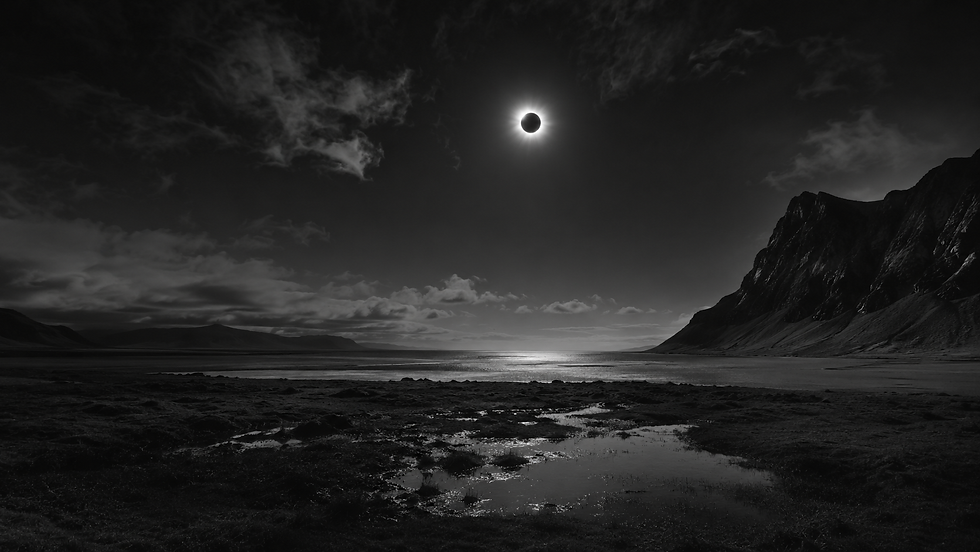
The 2026 Total Solar Eclipse and a Journey Back into History
Without warning, daylight began to fade. The Sun, shining only moments before above the North Atlantic, slowly disappeared from the sky. The landscape darkened, birds fell silent, and for a few minutes, day turned into night.
Today we know this was a perfectly predictable astronomical event—a total solar eclipse. But for the first Viking settlers in Iceland, it may have been something utterly mysterious and impossible to explain.
Explore more articles about the upcoming total solar eclipse in Iceland HERE
The First Vikings in Iceland and an Unfamiliar Sky
The settlement of Iceland began around AD 870. Migrants from Norway and other parts of Scandinavia brought with them not only practical skills but also a rich world of myths and legends.
Just a few years after their arrival, a total solar eclipse crossed the island on 29 October 878. For this young colony, it may have been their first encounter with a phenomenon that we now understand as a natural astronomical event.
Without scientific knowledge, the world suddenly changed during the middle of the day. The Sun vanished, temperatures dropped, and nature behaved as if dusk had arrived.

How the Vikings Explained a Solar Eclipse
In Old Norse mythology, later written down in Iceland in the collections known as the Eddas, two wolves are said to chase the Sun and the Moon across the sky.
The wolf Sköll pursues the Sun, while Hati chases the Moon.
Their endless pursuit is destined to end only at Ragnarök, the end of the world.
Although the Eddas were written in the 13th century, they preserve much older oral traditions that had been passed down in Iceland for generations.
The Solar Eclipse of AD 878: How the Vikings May Have Experienced It
It is not difficult to imagine the scene.
Small settlements. A rugged volcanic landscape. No science. No predictions.
Then, in the middle of the day, darkness suddenly spread across the land.
To the Vikings, such an event could easily have been interpreted as:
a sign from the gods,
a battle between cosmic forces,
or the very moment when the wolf finally caught the Sun.
Historical Solar Eclipses in Iceland
Since the settlement of Iceland, several total solar eclipses have been visible from the island. The first occurred during the earliest years of Viking colonisation.
Today we know exactly when these eclipses will occur, and Iceland has become one of the world's most sought-after destinations for observing them.
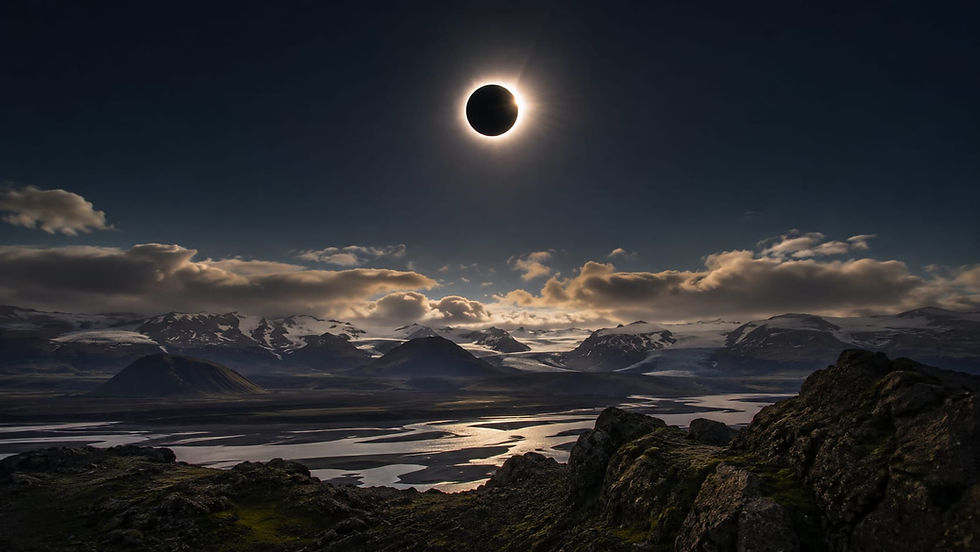
The 2026 Total Solar Eclipse in Iceland
Modern visitors will experience something very different from the Vikings.
They will know:
exactly when the eclipse begins,
where it will be visible,
and how long totality will last.
Yet the experience itself remains remarkably similar—a sudden change in light, silence across the landscape, and the feeling that nature has paused for a brief moment.

Why Total Solar Eclipses Still Fascinate Us Today
Although we now understand the physics behind them, total solar eclipses remain among the most breathtaking astronomical phenomena.
That is precisely why it is easy to imagine why people in the past explained them through myths about gods, wolves, and the struggle between light and darkness.
Frequently Asked Questions
Question | Answer |
When did the solar eclipse occur in Iceland in AD 878? | On 29 October 878. |
How did the Vikings explain a solar eclipse? | Through Norse mythology, believing that the wolf Sköll was pursuing and swallowing the Sun. |
Where are the myths of Sköll and Hati recorded? | In the Old Norse Eddas, medieval Icelandic texts preserving earlier oral traditions. |
Will the 2026 total solar eclipse be visible from Iceland? | Yes. Iceland will be one of the world's premier locations for observing the eclipse. |
Sources
Prose Edda – Snorri Sturluson
Poetic Edda (Old Norse texts preserved in Iceland)
NASA Eclipse Catalog
https://eclipse2026.is/stories/how-many-total-solar-eclipses-have-been-seen-from-iceland

About the Author
Iceland has fascinated me for many years. Over the course of numerous journeys across the island, I have driven tens of thousands of kilometers, experienced storms that changed travel plans within minutes, and witnessed days when choosing the right route meant discovering places that most visitors never see. I documented many of these experiences in my documentary film Island in the North.
Through this website, I share practical travel advice, up-to-date information, and firsthand experiences from the field to help others explore Iceland more safely and gain a deeper understanding of its unique landscapes and ever-changing nature.


Komentáře