
ICELAND SOLAR ECLIPSE 2026 TRAVEL DISCUSSIONS: ACCOMMODATION, TRAFFIC AND PLANNING
- Roman Pech
- 30. 6.
- Minut čtení: 4

The total solar eclipse on August 12, 2026 will be one of the biggest tourism events in Iceland’s history. On major travel forums such as Reddit and other discussion groups, new questions from people all over the world appear every day. We reviewed the most discussed threads and selected the most frequently repeated questions.
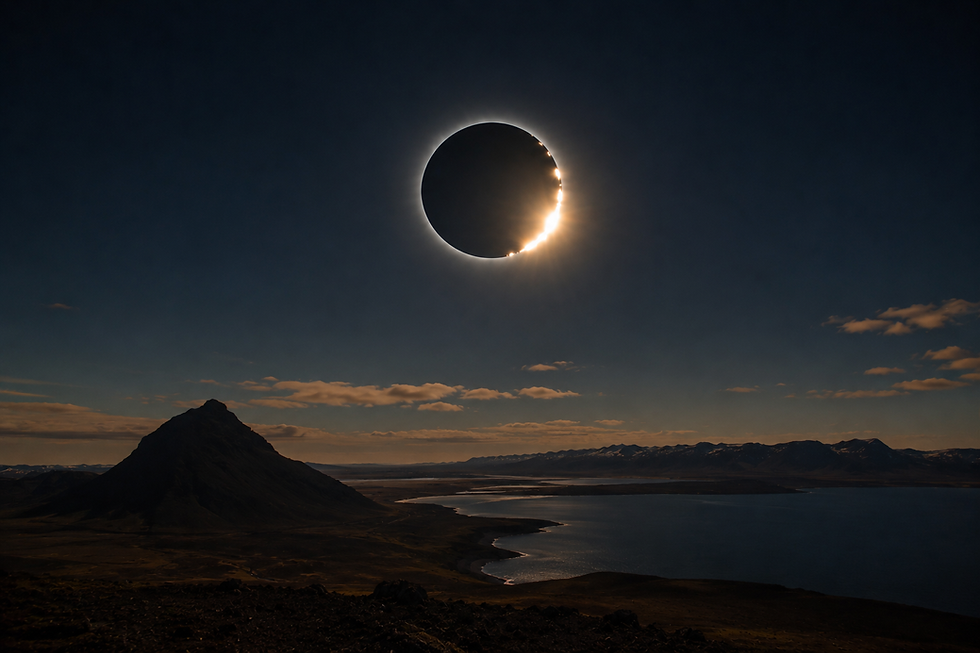
Iceland solar eclipse 2026:
“Is it already too late to book accommodation?”
Without a doubt, this is the most frequently asked question in recent weeks.
One user writes:
“Is it already too late? I can't find anything around Snæfellsnes anymore.”
More experienced travelers responded almost immediately:
“You are way too late. Most people booked one or even two years ago.”

Similar reactions appear throughout the thread. Most participants agree that the best accommodation options disappeared from booking systems long before this summer.
Find complete and up-to-date information about the 2026 solar eclipse in Iceland HERE
Where is accommodation still available?
As of June 30, 2026, the situation is not hopeless, but availability has become significantly limited.
Location | Availability | Approx. price per night |
Snæfellsnes | almost sold out | €700–1,200 |
Borgarnes | last rooms | €450–900 |
Stykkishólmur | minimal availability | €700–1,000 |
Reykjavík | still relatively good availability | €280–600 |
Akureyri | good availability | €220–450 |
Campsites | mostly available spots | €25–40 per person |
(Prices are approximate and may change depending on demand.)
The most common advice from experienced travelers
“Stay where you can actually find a room. Drive on eclipse day.”
The reason is simple. In Iceland, weather often determines everything. If the path of totality is cloudy, it may be better to drive several dozen kilometers rather than insist on staying close to a single location.
“What if my Airbnb host cancels?”
One of the most discussed threads starts briefly:
“I had an Airbnb host cancel on me...”
The author continues:
“I booked it last year for about $700. The same place is now listed for almost three times more.”

Under the post, dozens of reactions quickly appeared. The most common responses were surprisingly consistent:
“Keep checking every day.”
“Always have a backup plan.”
“Book a campsite just in case.”
“Will traffic really be that bad?”
If there is one topic discussed as often as accommodation, it is transportation.
One answer appears in nearly every thread:
“Traffic will be your biggest problem.”
Another experienced traveler advises:
“Leave much earlier than you think you need.”
Why are people so concerned?
The reason is simple — experience from the United States.
During the total solar eclipse in 2017, millions of people traveled into the path of totality. After the event ended, some U.S. highways turned into massive parking lots for hours. Journeys that normally took two hours stretched to eight to twelve hours.

Millions of people traveling for the 2017 solar eclipse in the U.S. caused massive traffic congestion. Photo: Wyoming Highway Patrol
A similar situation occurred during the April 2024 eclipse, when authorities in several states warned in advance about extreme traffic loads.
This is why discussions suggest Iceland may be even more challenging. The road network is much smaller, and most visitors will head to the same areas in western Iceland.
The most common advice
“Arrive early. Stay late.”
Locals recommend waiting several hours after the eclipse, having lunch, or visiting nearby attractions. The worst option is to leave together with thousands of others immediately after totality ends.

“Should I stay in Reykjavík instead?”
This question appears more and more often in discussions.
One highly upvoted comment says:
“Yes. You can always drive where the weather is better.”
Many experienced travelers now consider Reykjavík the best base.
Advantages are clear:
the largest selection of hotels
better access to services
the ability to decide in the morning based on cloud cover
“Are clouds a bigger problem than traffic?”
Perhaps the most interesting insight of all.
Nearly every thread repeats the same idea:
“Clouds will be your biggest enemy.”
Another user adds:
“You can drive thirty kilometres and get a completely different sky.”
The most common advice
“Have a Plan B.”
Weather in Iceland changes very quickly, and flexibility may decide whether you actually see the eclipse.

What surprised us most while reading the discussions?
We originally expected people to focus mainly on cameras, lenses, or the best photography locations.
In reality, most debates revolve around completely different topics:
Where can I still find accommodation?
What if my Airbnb reservation gets canceled?
How can I avoid traffic jams?
Is it better to stay in Reykjavík?
Will clouds end up being the biggest problem?
One thing experienced travelers agree on almost unanimously:
A successful eclipse trip will not depend only on astronomy. It will depend primarily on good planning, sufficient time buffers, and the willingness to change plans according to the weather.

About the Author
Iceland has fascinated me for many years. Over the course of numerous journeys across the island, I have driven tens of thousands of kilometers, experienced storms that changed travel plans within minutes, and witnessed days when choosing the right route meant discovering places that most visitors never see. I documented many of these experiences in my documentary film Island in the North.
Through this website, I share practical travel advice, up-to-date information, and firsthand experiences from the field to help others explore Iceland more safely and gain a deeper understanding of its unique landscapes and ever-changing nature.


Komentáře